IN THIS ARTICLE
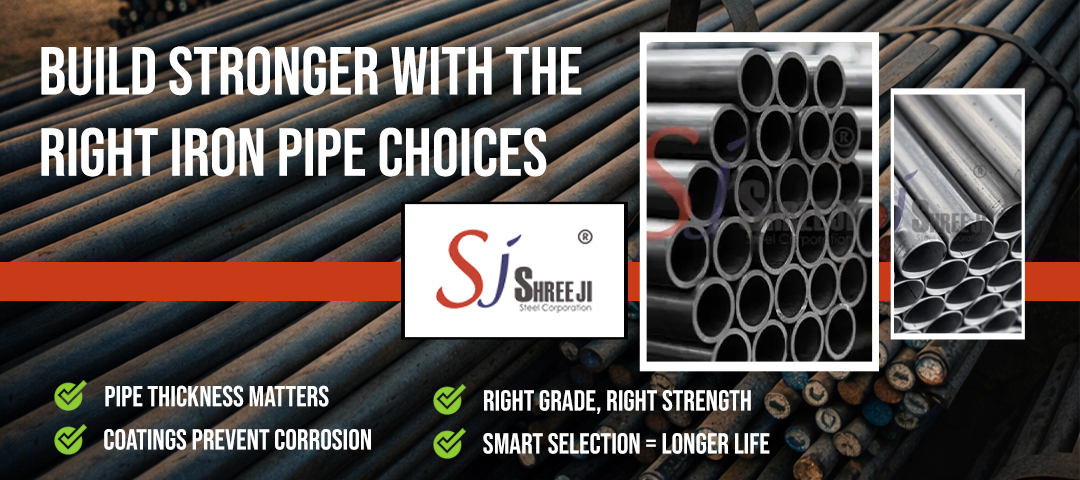
Iron pipes might be the most underrated construction material, ensuring the longevity and structural integrity of the project. Whether you’re working on a large construction project, a plumbing installation, or an industrial piping system, you must choose the right iron pipe to ensure optimal results. To that end, considering thickness, grades and coatings are mandatory.
Why is considering the thickness of the iron pipe mandatory?
Iron pipe thickness is one of the key controllers of the pipe’s strength and suitability for different applications. Thickness provides the pipe with the capability to withstand internal pressure, external forces, and environmental conditions. Therefore, it is crucial to ensure the longest possible lifespan for any construction project.
The distances between the outer and inner surfaces commonly determine the thickness. Thicker pipes are robust and can handle higher pressure. This feature makes these pipes ideal for gas pipelines, fire protection systems, and high-pressure water distribution systems. On the contrary, thinner pipes are designed for low-pressure applications such as domestic plumbing. As these works do not require high pressure, thinner pipes perform extremely well.
What Are Different The Grades of Iron Pipes?
The grade of the iron pipe depends on the material strength. There is a wide range of garden products available in the market, catering for diverse projects. You must select the one that fits the demands of your construction.
Ductile Iron
Ductile iron is known for its unparalleled strength and resistance against fracture. Its unique composition allows it to handle both pressure and impact. This makes the ductile iron ideal for diverse projects, including water and wastewater piping systems.
Cast Iron
Cast iron is not as strong as ductile iron. However, it is known for its greater durability and corrosion resistance. Hence, it is ideal for low-pressure projects where corrosion resistance is important, such as drainage systems.
Malleable Iron
Malleable iron shares many of the properties of cast iron, with the added flexibility. To that end, seasoned constructors use it in projects where flexibility is essential, along with durability and corrosion resistance.
What Are Diverse Coatings of Iron Pipes?
Iron pipes are highly susceptible to corrosion. It can double when they are exposed to moisture, chemicals, or varying environmental conditions. To prevent rust and other issues, coatings are mandatory to enhance lifespan.
Epoxy Coating
Epoxy coatings are known for their unmatched resistance to corrosion and chemical exposure, making them ideal for constant water exposure. You can use epoxy-coated iron pipe for water and sewage systems for longevity.
Zinc Coating
Zinc coatings are popularly known as galvanisation. It is applied to provide a barrier over the pipe, increasing its resistance to rust and corrosion. It can be used for exposed environments, such as fencing and structural purposes, and for plumbing, providing long-term value.
Polymer Coating
Although all the above-mentioned pipes are perfect for exposed conditions, they can’t withstand harsh environments. For that, you must opt for iron pipes with polymer coatings. These coatings are highly resistant to both physical abrasion and chemical degradation, making them a one-time choice for institutional use.
Bituminous Coating
Iron pipes with bituminous coating are less common and are used only for underground pipes. The specific coating offers a strong shield against moisture and soil chemicals.
How to Choose the Right Combination?
When choosing the iron pipes for your next project, you must understand the chemistry that governs pipe thickness, grade, and coating. For instance, if you are planning a residential project with high moisture content and pressure, opt for a ductile iron pipe with an epoxy coating. On the other hand, if you are planning a project where the temperature isgoing to be high and the pressure low, go for a thinner malleable iron pipe with a zinc coating.
Tpo ensure a longer lifespan and prevent hefty maintenance costs, do not forget to consider weather impacts. Consider factors such as chemical exposure, moisture content, and temperature differences.
Selecting iron pipes based on these factors is mandatory. It helps to ensure that the pipes can withstand the test of time and contribute to a safer life. If you still require guidance, connect with us. At Shreeji Steel Pvt Ltd, we offer a wide range of iron pipes. Share your project details with us to get the right guidance on choosing and leveraging the highest benefits of your investment.
FAQs
How do I know which coating is best for my iron pipe installation?
There is no perfect coating. Every coating comes with its unique advantages and challenges. To select the best one for your project, consider factors such as weather elements, chemical exposure, etc.
Can my pipes face rust even after a tailored selection?
Certainly, you can still face rust and corrosion even after choosing the best option for your project. To prevent that, always follow a maintenance routine.
How frequently do iron pipes require inspection for maintenance?
Typically, iron pipes require maintenance every 3 to 5 years. However, if you have older properties, frequent inspections are required.