Introduction – The Importance of Steel in Modern Construction
As we step into 2026, the construction industry continues to rely heavily on steel — a material that combines strength, flexibility, and sustainability. From residential homes to skyscrapers and bridges, steel remains the backbone of infrastructure development worldwide.
At Shree Ji Steel Private Limited, we supply a wide range of construction steel products that meet international standards of quality and durability. Whether you’re building a home or managing a large industrial project, understanding the types of steel used in construction is crucial for safety, performance, and longevity.
Let’s explore the three mandatory types of steels every builder, architect, and engineer must know in 2026.
Mild Steel (MS) – The Most Common and Versatile Option
What Is Mild Steel?
Mild Steel (MS) is the most widely used steel type in the construction industry. It contains a small percentage of carbon, usually between 0.05% and 0.25%, which gives it exceptional ductility and malleability. This allows it to be easily shaped, welded, and fabricated without losing strength.
Because of its affordability and adaptability, mild steel is used in almost every kind of construction project — from residential buildings to industrial frameworks.
Key Advantages of Mild Steel
-
Excellent flexibility: Can be bent, cut, or welded easily
-
High durability: Resists wear and deformation
-
Cost-effective: Offers strength at a lower cost
-
Environmentally friendly: Fully recyclable
Common Applications
-
Building frames and columns
-
Roofing and fencing structures
-
Pipelines and machinery parts
-
Gates, railings, and architectural components
At Shree Ji Steel Private Limited, our mild steel beams, angles, and channels are manufactured under strict quality standards to ensure consistency and long-term performance.
Structural Steel – The Framework of Modern Infrastructure
What Makes Structural Steel Special?
Structural Steel is known for its high strength, stiffness, and load-bearing capacity. It’s primarily composed of iron and carbon, with additional elements like manganese, silicon, and copper that enhance durability and corrosion resistance.
This type of steel is widely used in large-scale construction projects such as bridges, skyscrapers, and industrial complexes because of its ability to support heavy loads while maintaining a relatively low weight.
Key Advantages of Structural Steel
-
High strength-to-weight ratio: Provides maximum support with minimal material
-
Design versatility: Can be fabricated into I-beams, H-beams, and channels
-
Long-lasting: Resistant to corrosion and environmental stress
-
Recyclable: A sustainable material for green construction
Common Applications
-
Bridges and flyovers
-
Multi-storey commercial buildings
-
Industrial sheds and warehouses
-
Towers, platforms, and heavy machinery
As a top supplier of structural steel in India, Shree Ji Steel Private Limited offers a comprehensive range of I-beams, H-beams, and MS channels, ensuring top performance and structural reliability.
Reinforcement Steel (TMT Bars) – The Strength Within Concrete
Why Reinforcement Steel Is Crucial
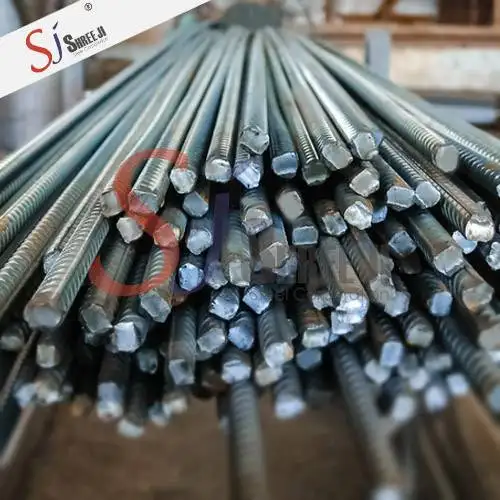
Reinforcement Steel, popularly known as TMT Bars (Thermo Mechanically Treated Bars), plays a key role in reinforced concrete construction (RCC). Concrete alone can handle compression well but is weak in tension — this is where TMT bars make the difference.
These bars have a tough outer layer and a soft, flexible core, making them strong, ductile, and earthquake-resistant — ideal for modern infrastructure in seismic-prone regions.
Key Advantages of Reinforcement Steel
-
High tensile strength: Perfect for heavy load-bearing structures
-
Flexibility: Enhances earthquake resistance
-
Corrosion-resistant: Long life in humid and coastal environments
-
Strong bonding: Excellent grip with concrete surfaces
Common Applications
-
Foundations, beams, and slabs
-
Bridges, flyovers, and highways
-
High-rise and residential buildings
-
Dams and tunnels
At Shree Ji Steel Private Limited, we supply top-quality TMT bars from India’s leading brands — including SAIL, JSW, and TATA — to ensure strength, flexibility, and long-term safety in every project.
Why Choosing the Right Type of Steel Matters
Each steel type serves a unique purpose in construction. Selecting the right one based on your project’s design and load requirements ensures both safety and cost efficiency.
| Steel Type | Key Feature | Ideal For |
|---|---|---|
| Mild Steel | Flexible and weldable | Frames, structures, and pipelines |
| Structural Steel | Heavy load-bearing | Bridges, towers, and large buildings |
| Reinforcement Steel | Tensile strength | RCC and earthquake-resistant structures |
Using certified and tested steel materials from a trusted supplier like Shree Ji Steel Private Limited guarantees quality, compliance, and long-lasting strength.
Shree Ji Steel Private Limited – India’s Trusted Steel Supplier
As a leading steel supplier and wholesaler in India, Shree Ji Steel Private Limited provides all three major types of steel required for modern construction. Our products are tested for durability, safety, and compliance with Indian and international standards.
Why Partner with Us
-
Wide range of construction steel products
-
Reliable and timely delivery
-
Competitive pricing for all project sizes
-
Expert support for choosing the right materials
Our goal is to build a stronger, safer, and more sustainable India through superior-quality steel products.
(Explore more at Shree Ji Steel Private Limited)
Conclusion – Building the Future with the Right Steel
As construction technology advances in 2026, choosing the right steel type has never been more important. The three types of steel — mild steel, structural steel, and reinforcement steel — form the foundation of durable, safe, and sustainable structures across India.
When sourced from Shree Ji Steel Private Limited, you can be confident in the quality, consistency, and strength of every product — ensuring that every project you build today stands strong for decades to come.