IN THIS ARTICLE
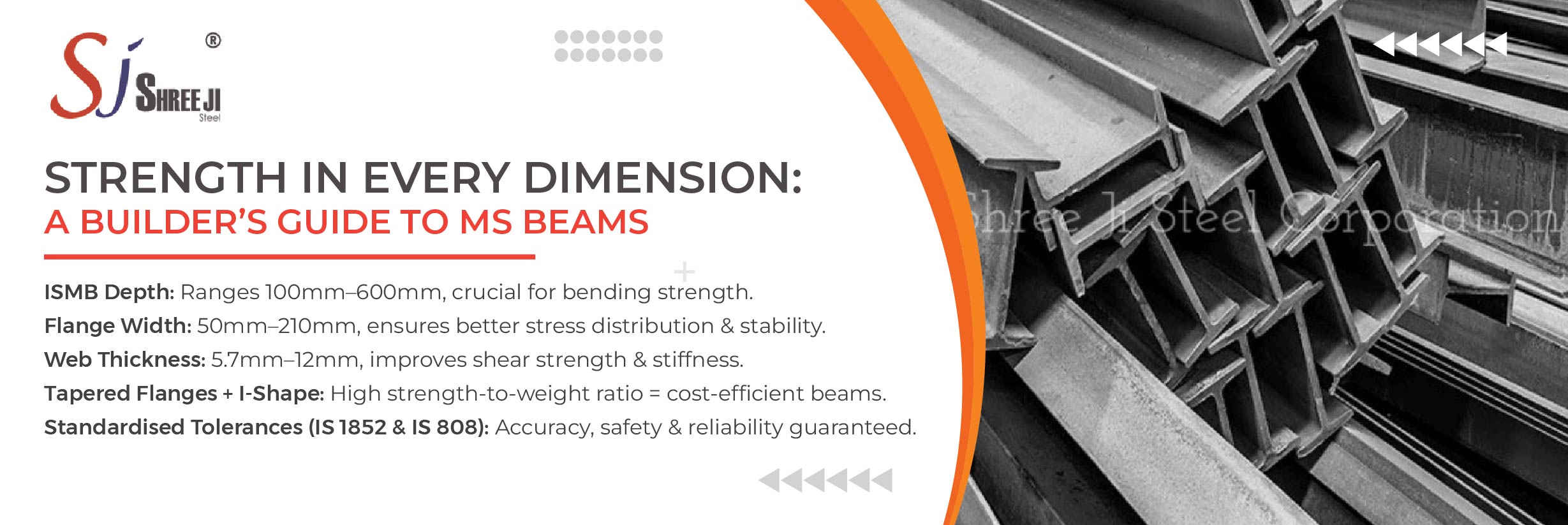
Indian Standard Medium Beam (ISMB) is a commonly used structural steel section in modern construction. It is one of the strongest, toughest, and most load-efficient structures available in the market. With an I-shape cross-section and tapered flange, ISMBs can be used in beams, columns and frames in structures (buildings, bridges and industrial structures). Determining the dimensions and precise details of ISMB is vital for structural design, production, and field work.
It is important to understand the key measurement along with the manufacturing tolerance. For instance, beam depth, flange width, and web thickness. These measurements ensure safety, compliance, and material optimisation. Here, you get access to practical insights into measuring MS ISMB sections and interpreting standard tolerances. The ultimate goal is to help engineers, fabricators, and builders make informed choices.
Key Features of ISMB Sections
The geometry of ISMB sections is also specifically designed to accommodate various types and structures. These properties have a direct impact on loading capacity, the placement of weight, and the overall performance of the beam.
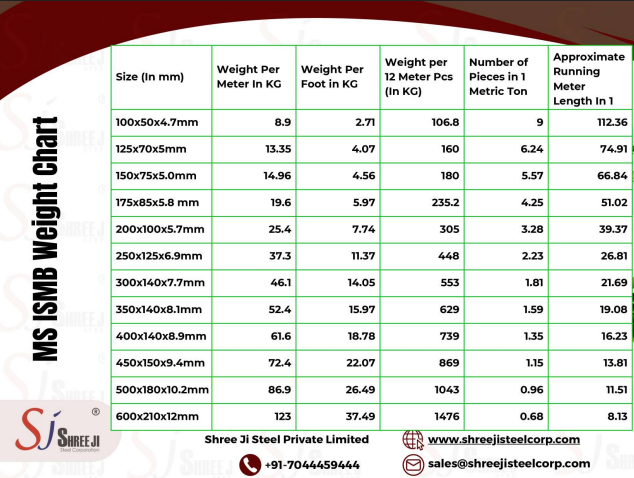
- Depth of the Beam: ISMB sections are available in various sizes, typically ranging from 100 mm to 600 mm in depth. The depth plays a major role in determining the bending strength of the beam.
- Flange Width: The width of the flanges varies from 50 mm to 210 mm, depending on the size of the section. Wider flanges facilitate better stress distribution and provide stability under load.
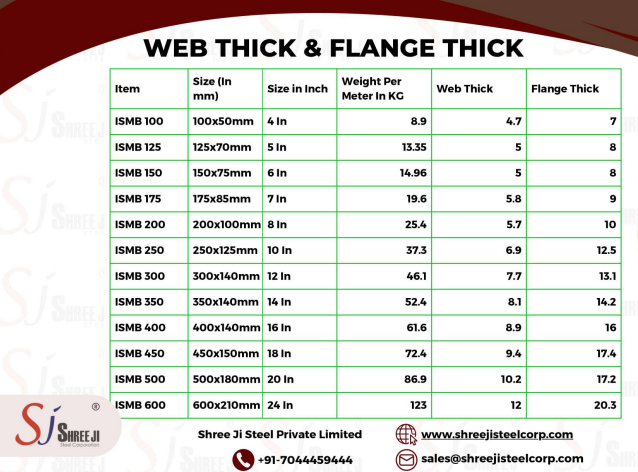
- Web Thickness: The thickness of the central vertical section, known as the web, generally ranges from 5.7 mm to 12 mm. A thicker web improves the shear strength and stiffness of the beam.
Tapered flanges and an I-shape cross-section result in a high strength-to-weight ratio, thereby offering cost-effective and structural efficiency in ISMB beams. These properties ensure that ISMB is an ideal option for both light and heavy-structural applications across various industries.
Understanding Dimensional Tolerances
In structural steel applications, dimensional tolerance plays a critical role. Moreover, it includes ensuring the accuracy at the time of fabrication, alignment during assembly, and overall structural performance.
In structural steel applications, dimensional tolerances play a major role in ensuring accuracy during fabrication, ensuring proper alignment during assembly, and ultimately, in maintaining overall structural performance. The tolerances of the MS ISMB section are standardised under IS 1852 and IS 808. Further, providing consistency and reliability throughout various projects.
Depth Tolerance:
The depth of the MS Beam influences its bending strength and load-bearing capacity. The following tolerances are allowed:
- Up to 200 mm depth: +3.0 mm / -2.0 mm
- 200 mm to 400 mm depth: ±3.0 mm
- 400 mm to 600 mm depth: ±4.0 mm
Keeping these limits ensures that the beam’s load will perform as desired under structural loads.
Flange Width Tolerance:
The flange width impacts lateral stability and load transfer across connections. Tolerance levels that are allowed include:
- Less than 100 mm: ±2.0 mm
- 100 mm to 125 mm: ±2.5 mm
- 125 mm to 250 mm: ±4.0 mm
These tolerances ensure precise alignment, reduce material wastage, and also contribute to overall structural reliability.
Are you searching for a reliable yet high-efficient MS Beams? Trust Shree Ji Steel Private Limited to get precision-engineered ISMB sections. Get a comprehensive I-beam load chart and more details to select the right section for your project.