IN THIS ARTICLE
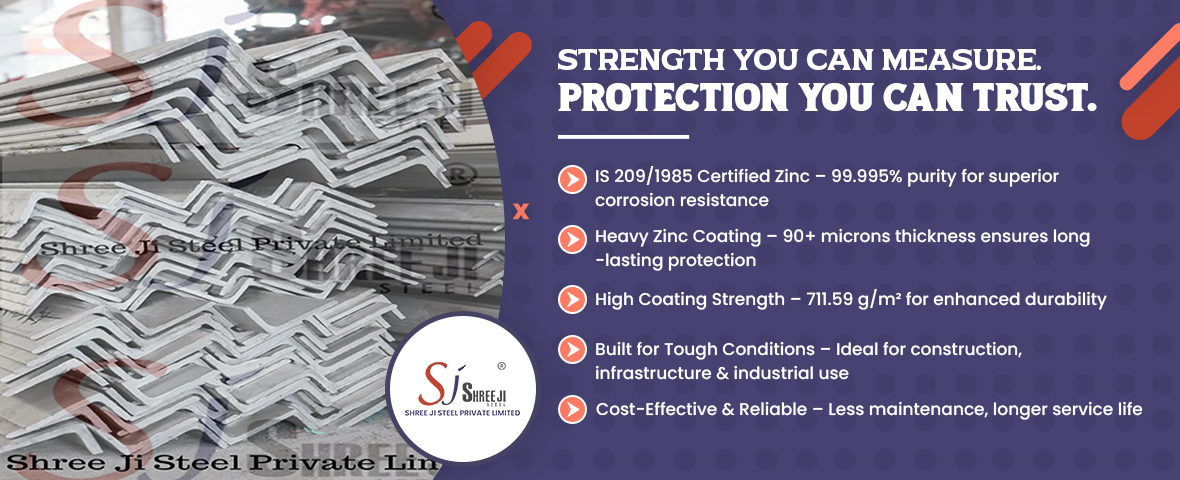
Cold Dip GI Angle has a wide range of applications in construction, infrastructure, and industrial use due to its strength, durability, and corrosion resistance. The choice of appropriate quality standards makes the angles effective in challenging conditions, from bridges and scaffolding to machinery production. The zinc grade, coating thickness, and electrometer readings are among the most significant specifications to consider, as they will determine the product’s lifespan and stability. For instance, the grade of zinc used in the Cold Dip GI angle bar follows IS 209/1985, with a remarkable purity of 99.995%. The electrometer reading is 90 microns or above, and the coating test result reaches 711.59 gm/m².
By understanding these standards, buyers can ensure their Cold Dip GI L Angle delivers maximum strength, corrosion resistance, and structural integrity for a variety of applications.
What Is the Grade of Zinc Used in Cold Dip GI Angle?
The cold-dip GI Angle is coated with zinc, which is essential for corrosion prevention and the lifespan of steel. The grade of zinc to be utilised in Cold Dip GI angle bar is in full adherence to the standards of IS 209/1985.
High Purity for Maximum Protection
The zinc used by reputable suppliers, such as Shree Ji Steel, has a purity of 99.995%, which is essential for providing superior corrosion resistance. High-purity zinc provides a fine, uniform protective coating that prevents rust on steel due to moisture, chemicals, and other environmental exposure.
Using zinc of this grade ensures that Cold Dip GI Angles maintain strength and durability, even in challenging climates or heavy-duty applications.
How Is the Coating Thickness Measured and Tested?
One of the quality attributes of Cold Dip GI Angles is the coating thickness. The angles are properly measured and tested so they can withstand harsh conditions and continue to provide protection.
-
Electrometer Reading
The thickness of the zinc layer is measured with an electrometer. In the case of Cold Dip GI Angle, the electrometer showed a reading of 90 microns or more. This degree of thickness provides strong corrosion protection and ensures a smooth, even application over the steel surface.
-
Coating Test Result
In addition to thickness, the coating is evaluated using standardised tests. The coating test result for the Cold Dip GI Angle is 711.59 g/m², demonstrating a heavy, durable zinc layer. This result reflects the steel’s ability to resist rust and environmental wear effectively.
Why Does Thickness Matter?
- Thick coatings enhance corrosion resistance and extend product life.
- Uniform coatings prevent weak points that could compromise structural integrity.
- Ensures compliance with industrial standards for construction and manufacturing projects.
Why Are These Standards Important for Durability?
Adhering to strict quality standards is essential for maximising the lifespan and reliability of Cold Dip GI Angles.
-
Enhanced Corrosion Resistance
A combination of high-purity zinc and proper coating thickness ensures that the steel remains protected even under adverse weather conditions. Bridges, towers, and scaffolding constructed with these angles maintain their integrity for decades.
-
Long-Term Structural Integrity
Cold Dip GI Angles that meet IS 209/1985 and other specifications are less likely to warp, crack, or corrode. This ensures that the framework they support remains stable and secure.
-
Compliance Assurance
Using angles that conform to standards such as IS 209/1985 and IS 2633:1985 gives engineers and contractors confidence in their material choices. Compliance reduces the risk of premature failure and ensures that projects meet regulatory requirements.
-
Cost Efficiency
Though Cold Dip GI Angels might be more expensive at the beginning than untreated steel, they require less time to maintain and repair, making them cost-effective. Projects do not need a large number of replacements or coating repairs.
Looking for Cold Dip GI Angles that Last?
Looking for high-quality Cold Dip GI Angles that meet strict standards? At Shree Ji Steel, we supply certified angles with high-purity zinc, consistent coating thickness, and excellent durability. Want to ensure your construction or industrial project uses materials that last? Contact us today to explore our range and get expert guidance on the best Cold Dip GI Angles for your needs.
FAQs
1: What is Cold Dip GI Angle?
Cold Dip GI Angle is a galvanised steel angle that is coated with zinc to prevent corrosion and rust. It is widely used in construction, industrial structures, and infrastructure.
2: What are the common applications of Cold Dip GI Angle?
It is used in the construction of structures, scaffolding, bridges, towers, machinery supports, store racks, and other structural reinforcements.
3: How should Cold Dip GI L Angles be stored?
Cold Dip GI L Angles should be kept in a dry, covered area away from direct contact with the ground to maintain the zinc coating and prevent rusting.